Love this? Save it for later!
Share the inspiration with your friends
“You’ve got to try this almond milk—it tastes nothing like the carton stuff!” my friend called out over a clatter of dishes one afternoon. I was skeptical, honestly. The idea of making almond milk at home felt like one of those health trends that sounded fancy but maybe wasn’t worth the effort. But, out of curiosity (and a touch of kitchen boredom), I gave it a shot. What caught me off guard was how fresh and subtly nutty the almond milk turned out, without any weird additives or preservatives lurking inside.
It started as a simple experiment on a rainy weekend when the usual grocery run was delayed. I had a bag of raw almonds and some time to kill, so I soaked them, blended them, and strained the mixture. The result? A creamy, smooth, and naturally sweet almond milk that felt like a little wholesome boost for my mornings. The kitchen smelled faintly of nuts and something comforting, like a gentle reminder of simpler days.
Since then, I’ve found myself making this fresh homemade almond milk more than once a week—honestly, it’s become a quiet ritual. It’s perfect for those moments when you want to feel grounded but also treat your body well. Plus, it pairs wonderfully with everything from my morning coffee to the creamy French onion dip I whipped up for a casual weekend snack. It’s a subtle but satisfying change from the usual store-bought versions, and it feels like a little gift of nourishment I can keep making at home without fuss.
That’s what stuck with me: the quiet confidence that this fresh homemade almond milk is not just a drink, but a wholesome boost you can tailor to your taste and lifestyle. No frills, no stress, just naturally good stuff you can trust. And I’m pretty sure once you try it, you’ll feel that too.
Why You’ll Love This Recipe
Making fresh homemade almond milk isn’t just about skipping the carton. After testing and tweaking this recipe multiple times, I can say it’s one of those simple kitchen wins that really sticks with you. Here’s why this almond milk recipe stands out:
- Quick & Easy: Takes about 10 minutes plus soaking time, so it’s perfect for busy mornings or prepping ahead.
- Simple Ingredients: Just raw almonds and water, with optional natural sweeteners or flavorings you likely have on hand.
- Perfect for Many Uses: From smoothies to baking (try it in this creamy chicken broccoli pasta salad), or just sipping straight up.
- Crowd-Pleaser: Even those who usually avoid dairy-free milks tend to love how fresh and clean this tastes.
- Unbelievably Delicious: The texture is silky smooth, with a natural nuttiness that feels comforting without overpowering.
What really sets this almond milk recipe apart is its straightforward approach. No complicated ingredients or fancy gadgets—just soaking and blending almonds to unlock their creamy goodness. I’ve found that soaking the almonds overnight softens them just right, making the milk taste richer and less bitter than some store-bought versions. Plus, you can customize it with a pinch of sea salt or a splash of vanilla for a subtle flavor lift.
It’s the kind of recipe that quietly becomes part of your daily routine, like the way a warm cup of coffee feels essential but also personal. Whether you’re looking for a wholesome boost, a dairy-free alternative, or just a fresher taste, this almond milk recipe delivers every single time.
What Ingredients You Will Need
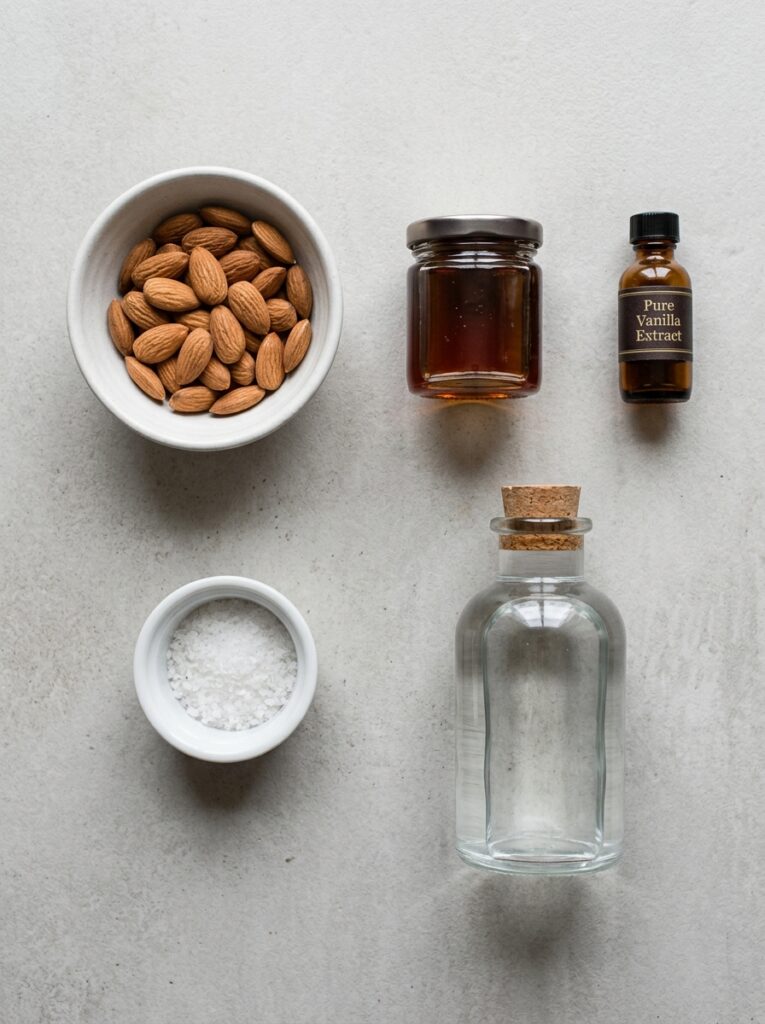
This fresh homemade almond milk recipe uses simple, wholesome ingredients to deliver a creamy, satisfying drink without any fuss or additives. Most are pantry staples or easy to source at your local market. Here’s what you’ll need:
- Raw almonds: 1 cup (about 140 grams), soaked overnight for best texture
- Filtered water: 4 cups (960 ml) for blending; plus extra for soaking
- Optional sweetener: 1-2 tablespoons maple syrup, honey, or agave nectar for a touch of natural sweetness
- Optional flavorings: 1 teaspoon vanilla extract or a pinch of sea salt to enhance taste
When picking almonds, I prefer raw, organic ones for the cleanest flavor—brands like Blue Diamond or local bulk bin options work well. Soaking softens the nuts, making the milk smoother and less bitter. If you’re short on time, a quick 2-hour soak helps, but overnight is ideal.
For a dairy-free or vegan version, skip honey and opt for maple syrup or agave nectar instead. If you want a creamier texture, you can add a tablespoon of almond butter or a few soaked cashews in the blend. This recipe is wonderfully flexible, so feel free to tweak according to your pantry and taste buds.
Equipment Needed
- High-speed blender: Essential for breaking down the almonds into a silky milk. I’ve tried regular blenders, but a strong motor (like Vitamix or Blendtec) gives the best smoothness.
- Nut milk bag or fine mesh strainer: To strain out the almond pulp and get smooth milk. Nut milk bags are reusable and easy to clean. A fine mesh sieve works, but you might get a bit more pulp.
- Large bowl or pitcher: To catch the milk as you strain it.
- Glass jar or bottle: For storing your almond milk fresh in the fridge.
If you don’t have a nut milk bag, a clean cotton kitchen towel or muslin cloth works in a pinch. I keep a dedicated nut milk bag just for this recipe because it’s quick to clean and holds up well over time. For budget-friendly blending, even a mid-range blender can do the job if you blend longer and pulse carefully.
Preparation Method
- Soak the almonds: Place 1 cup (140 g) of raw almonds in a bowl and cover with plenty of filtered water. Let them soak overnight or for at least 8 hours. This softens the nuts and makes blending easier. (Tip: Soaking also helps reduce phytic acid, which can improve digestibility.)
- Drain and rinse: After soaking, drain the almonds and rinse them thoroughly under cool running water. This rinses off any residue and preps the almonds for blending.
- Blend almonds and water: Add the soaked almonds to your blender along with 4 cups (960 ml) of filtered water. Blend on high speed for 1-2 minutes until the mixture looks creamy and smooth. (Look for a slightly frothy top and no visible large almond pieces.)
- Strain the milk: Place a nut milk bag or fine mesh strainer over a large bowl or pitcher. Pour the blended mixture through it, letting the milk drip through while gently squeezing the bag to extract every bit of liquid. Avoid pressing too hard to keep the milk clear rather than pulpy.
- Add sweetener and flavor: Pour the strained almond milk back into the blender or a container. Add 1-2 tablespoons of maple syrup or your preferred sweetener, plus a teaspoon of vanilla extract or a pinch of sea salt if desired. Stir or blend briefly to combine.
- Store and serve: Transfer the almond milk to a clean glass jar or bottle and keep it refrigerated. Shake gently before using, as natural separation can occur. Homemade almond milk stays fresh about 3-4 days.
A quick note: Don’t toss the leftover almond pulp! It’s perfect for adding to smoothies, baking, or even mixing into oatmeal for extra fiber and texture.
Cooking Tips & Techniques
When I first started making almond milk, I used too few almonds and ended up with a watery, bland drink. Lesson learned: the almond-to-water ratio matters for flavor and creaminess. Stick to 1 cup almonds for 4 cups water for a balanced, rich milk.
Also, blending time is crucial. Blend long enough to break down the nuts fully, but don’t overblend to avoid heating the milk or adding bitterness. A high-speed blender really makes the difference here.
Straining is where patience pays off. Using a nut milk bag lets you get smooth milk without gritty bits. I usually strain twice if I want an ultra-smooth texture, especially if I’m using the milk for coffee or cereal.
For a thicker milk, cut back water slightly or add a tablespoon of soaked cashews during blending. If you like it lighter, add more water accordingly.
Lastly, always store your almond milk in the fridge and give it a good shake before pouring. Natural separation is normal and doesn’t affect taste.
Variations & Adaptations
- Chocolate almond milk: Add 2 tablespoons of cocoa powder and a little extra sweetener during blending. It’s an easy homemade treat that beats store-bought chocolate milk.
- Spiced almond milk: Blend in a pinch of cinnamon, nutmeg, or cardamom for a warming twist, great for cozy mornings.
- Unsweetened version: Simply omit sweeteners for a pure, natural almond flavor—ideal for savory uses or those watching sugar intake.
- Thick almond cream: Use less water (about 2 cups for 1 cup almonds) to create a rich cream perfect for vegan sauces or desserts.
- Allergy-friendly swap: Substitute almonds with cashews or hemp seeds if you have nut allergies but want a similar homemade milk experience.
I once tried adding a splash of lemon orzo with spinach and feta to pair with my almond milk breakfast—it was a surprisingly fresh combo that fueled the day perfectly.
Serving & Storage Suggestions
Serve your fresh homemade almond milk chilled or at room temperature, depending on your preference. It tastes wonderful poured over cereal, stirred into coffee or tea, or just sipped straight up. For a refreshing treat, try blending it with frozen berries or a banana for an easy smoothie.
Store almond milk in a sealed glass jar or bottle in the fridge, where it will keep for about 3-4 days. Over time, separation is natural—just give it a good shake before using. Avoid freezing almond milk as it can change the texture and cause separation once thawed.
If you want to keep the pulp longer, dry it out in a low oven or dehydrator and use it as almond flour for baking, which reduces waste and adds extra nutrition.
Pairing almond milk with my creamy whipped feta from this recipe makes for a rich, satisfying snack or light meal that’s wholesome and delicious.
Nutritional Information & Benefits
Fresh homemade almond milk is low in calories, fat, and naturally free of lactose and cholesterol, making it a heart-healthy alternative to dairy. One cup (240 ml) typically contains around 30-50 calories, depending on added sweeteners.
Almonds are rich in vitamin E, an antioxidant that supports skin and immune health. The milk also provides small amounts of calcium and magnesium, especially if fortified or blended with mineral-rich water.
This almond milk recipe is gluten-free, dairy-free, and vegan-friendly, fitting nicely into many dietary lifestyles. Just watch out for nut allergies if serving to others.
From a wellness perspective, making your own almond milk lets you control sugar content and skip preservatives, so it’s a cleaner, more mindful choice that feels good inside and out.
Conclusion
This fresh homemade almond milk recipe is such a simple way to bring a wholesome boost to your daily routine. Whether you’re new to dairy alternatives or a seasoned plant-based eater, making almond milk at home lets you enjoy a clean, fresh, and customizable drink that’s truly satisfying.
Feel free to adjust sweetness, thickness, and flavorings to suit your taste. I love how it pairs with everything from morning smoothies to savory snacks like the creamy tuna mayo onigiri bites I often bring to casual gatherings. It’s a recipe that feels both personal and practical, and I hope it becomes a quiet favorite for you too.
Give it a try, and please share your own tweaks or experiences—there’s something special about swapping homemade recipes with friends that makes the kitchen feel even cozier.
FAQs
How long does homemade almond milk last in the fridge?
Keep it in a sealed container in the fridge for up to 3-4 days. Shake well before using as natural separation occurs.
Can I use roasted almonds instead of raw?
Raw almonds are best for this recipe. Roasted nuts can give a different flavor and may not blend as smoothly.
What can I do with the leftover almond pulp?
Save it for smoothies, baking, or dry it out to make almond flour for other recipes.
Is homemade almond milk suitable for babies or toddlers?
Check with your pediatrician before introducing almond milk to young children, especially if there are allergy concerns.
Can I sweeten almond milk with dates?
Yes! Soaking a couple of pitted dates and blending them with the almonds makes a naturally sweet milk without refined sugars.
Pin This Recipe!
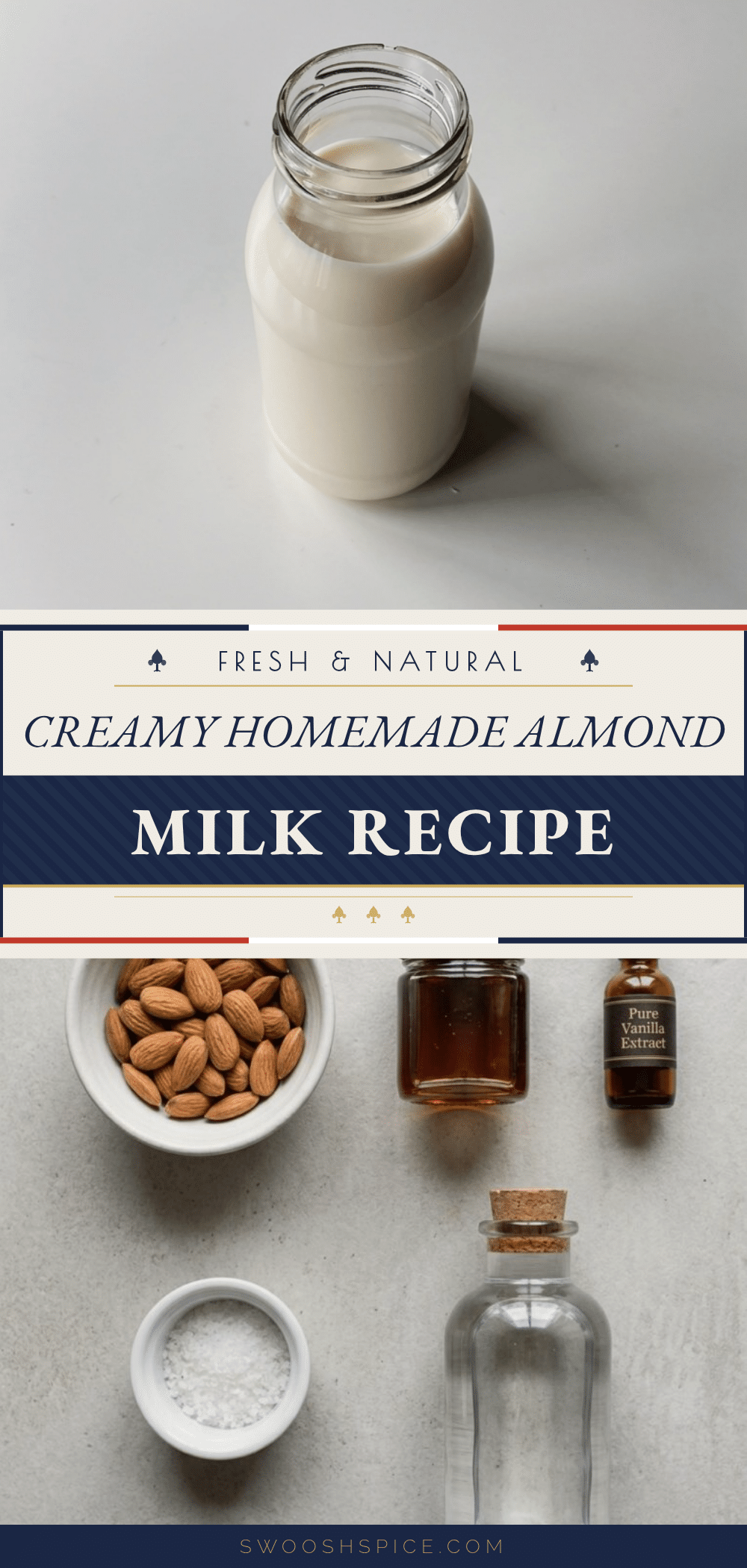
Fresh Homemade Almond Milk Recipe Easy 3-Step Wholesome Boost
A simple and wholesome homemade almond milk recipe that is fresh, creamy, and naturally sweetened without additives or preservatives. Perfect for daily use as a dairy-free alternative.
- Prep Time: 10 minutes plus soaking time
- Cook Time: 0 minutes
- Total Time: 10 minutes plus soaking time
- Yield: About 4 cups almond milk (approximately 4 servings) 1x
- Category: Beverage
- Cuisine: Vegan, Dairy-Free
Ingredients
- 1 cup raw almonds (about 140 grams), soaked overnight
- 4 cups filtered water (960 ml) for blending
- Optional sweetener: 1-2 tablespoons maple syrup, honey, or agave nectar
- Optional flavorings: 1 teaspoon vanilla extract or a pinch of sea salt
Instructions
- Soak the almonds: Place 1 cup (140 g) of raw almonds in a bowl and cover with plenty of filtered water. Let them soak overnight or for at least 8 hours.
- Drain and rinse: After soaking, drain the almonds and rinse them thoroughly under cool running water.
- Blend almonds and water: Add the soaked almonds to your blender along with 4 cups (960 ml) of filtered water. Blend on high speed for 1-2 minutes until creamy and smooth.
- Strain the milk: Place a nut milk bag or fine mesh strainer over a large bowl or pitcher. Pour the blended mixture through it, gently squeezing to extract the milk.
- Add sweetener and flavor: Pour the strained almond milk back into the blender or container. Add 1-2 tablespoons of sweetener and 1 teaspoon vanilla extract or a pinch of sea salt if desired. Stir or blend briefly.
- Store and serve: Transfer the almond milk to a clean glass jar or bottle and refrigerate. Shake gently before using. Use within 3-4 days.
Notes
Soak almonds overnight for best texture and flavor. Use a high-speed blender for smooth milk. Shake before use as natural separation occurs. Leftover almond pulp can be used in smoothies, baking, or dried for almond flour. Store in fridge for 3-4 days. Avoid freezing.
Nutrition
- Serving Size: 1 cup (240 ml)
- Calories: 40
- Sodium: 5
- Fat: 3
- Saturated Fat: 0.2
- Carbohydrates: 2
- Fiber: 1
- Protein: 1.5
Keywords: almond milk, homemade almond milk, dairy-free milk, vegan milk, plant-based milk, almond milk recipe, healthy drink, nut milk